

Client’s Corner
Wealth Through Innovation,
In One Statistic
THE 1970S WERE AN ECONOMIC, FINANCIAL, POLITICAL and geopolitical disaster for the United States.
Under relentless inflationary pressures, President Nixon had been forced to abandon the gold standard in August 1971. That gave vent to a cascade of stagflation that wouldn’t be arrested for ten years. Inflation pushed Americans into higher and higher tax brackets, even as their real incomes declined. It was the ultimate vicious cycle.
The S&P 500 peaked in early 1973 at 120 and all but halved thereafter; it wouldn’t reach that level again until 1980. Efforts toward ending the quagmire of Vietnam dragged on. The administration was soon enveloped in
the two-year agony of Watergate, ending with the president being driven from office.
War broke out in the Middle East in October 1973; when America supported Israel, the Arab states embargoed the sale of oil to the U.S. By the time the embargo was lifted some months later, the price of oil had quadrupled. After the Iranian revolution in 1979, it tripled again. In August of that same year, Business Week magazine published its infamous cover essay “The Death of Equities.” Like the 1930s before them and the 2000s after, the Somber Seventies were a lost decade.
Or were they?
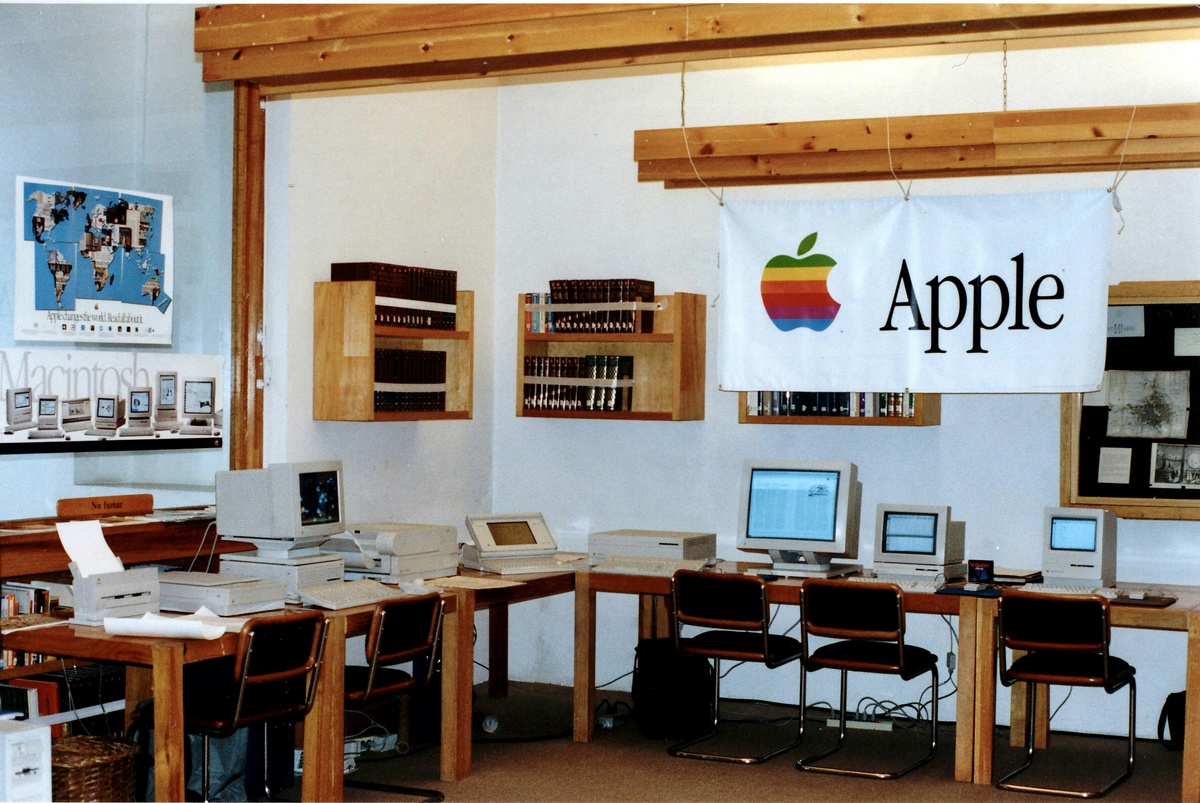
Only a few months after America abandoned the gold standard, Intel introduced the first commercially produced microprocessor—the entire computer on a chipand ushered in the modern world. It was like Gutenberg’s printing press to the nth power. Personal computing sim- ply exploded. On April 4, 1975, Bill Gates and Paul Allen founded Microsoft. On April 1 of the following year, Steve Jobs and Steve Wozniak started Apple Computer.
Fast forward to the present moment.
The market capitalization of Microsoft today is about $3.5 trillion; that of Apple about $3 trillion. Thus: two American companies, barely 50 years old, worth a total of $6.5 trillion.
What would you guess the gross domestic product (GDP) of the United States was in 1976? I’ll be happy to tell you. Adjusted for inflation: $6.5 trillion.
I know; at first I couldn’t believe it either. And I’ll never know what made me look it up. But in one anecdote, this juxtaposition confirms for me everything I believe about human ingenuity, and especially about the value that may be created when that ingenuity is captured in equities.
It may be argued that this comparison represents some or another species of apples and oranges. Or perhaps that these two companies’ stocks—along with others in the
so-called Magnificent Seven—are currently overvalued. That’s as may be; to me, the overarching point stands:
The current value of two companies which had barely been formed 50 years ago—companies employing a technology that had come into existence only five years before that—is about equal to the value of all the goods and services that were produced in this entire country the year the latter company was born.
I’m reasonably sure that if anyone had stood up in the middle of the Somber Seventies and predicted anything remotely like this, they’d have been dismissed as a crackpot. But the great thing about innovation in general—and technological innovation in particular—is that it doesn’t stop when the stock market goes down. At times, quite the contrary.
And the greatest thing about the several seemingly intractable crises of the Seventies is that, in every particular, they ended. The Communist government of a unified Vietnam eventually gave way to a vibrant free-market democracy that was just recently admitted to the BRICs group of major emerging economies. Paul Volcker’s monetary regime at the Federal Reserve broke the back of inflation for 40 years. From abject dependence on foreign oil, America—by means of technological innovations in horizontal
drilling and hydraulic fracturing—reclaimed its rightful position as the world’s largest oil producer.
And mainstream equities—declared dead by financial journalism at 108 on the S&P 500—have recently traded above 6,000. With dividends reinvested from August 1979 (the date of the Business Week piece) through this May, the Index compounded at 11.8%. Ten thousand dollars invested in the Index that month would have become $1.6 million, assuming taxes were paid from another source along the way.
You can’t get anywhere near these epiphanies through the medium of today’s news. In that sense, the news always serves to block out the great truths of successful investing—all of which become clearer when you take a long-term perspective.
If you’re like most serious investors, you’re not investing for what happens next. You’re investing for what will ultimately happen over the balance of your investing lifetime—and beyond, to the extent you care about legacy. To that end, as Churchill is reported to have said, “The farther backward you can look, the farther forward you can see.”
© July 2025 Nick Murray. All rights reserved. Used by permission
Source: S&P 500 levels: Standard & Poor’s, Yahoo Finance. Current market caps of Microsoft and Apple: Investopedia. CAGR of the S&P: S&P 500 Historical Return Calculator on the website “Of Dollars and Data.” Real (adjusted for inflation) 1976 GDP: Federal Reserve Bank of St. Louis (FRED).